ServicesWhole-Home Filtration
Whole-Home Water Filtration in Kemah
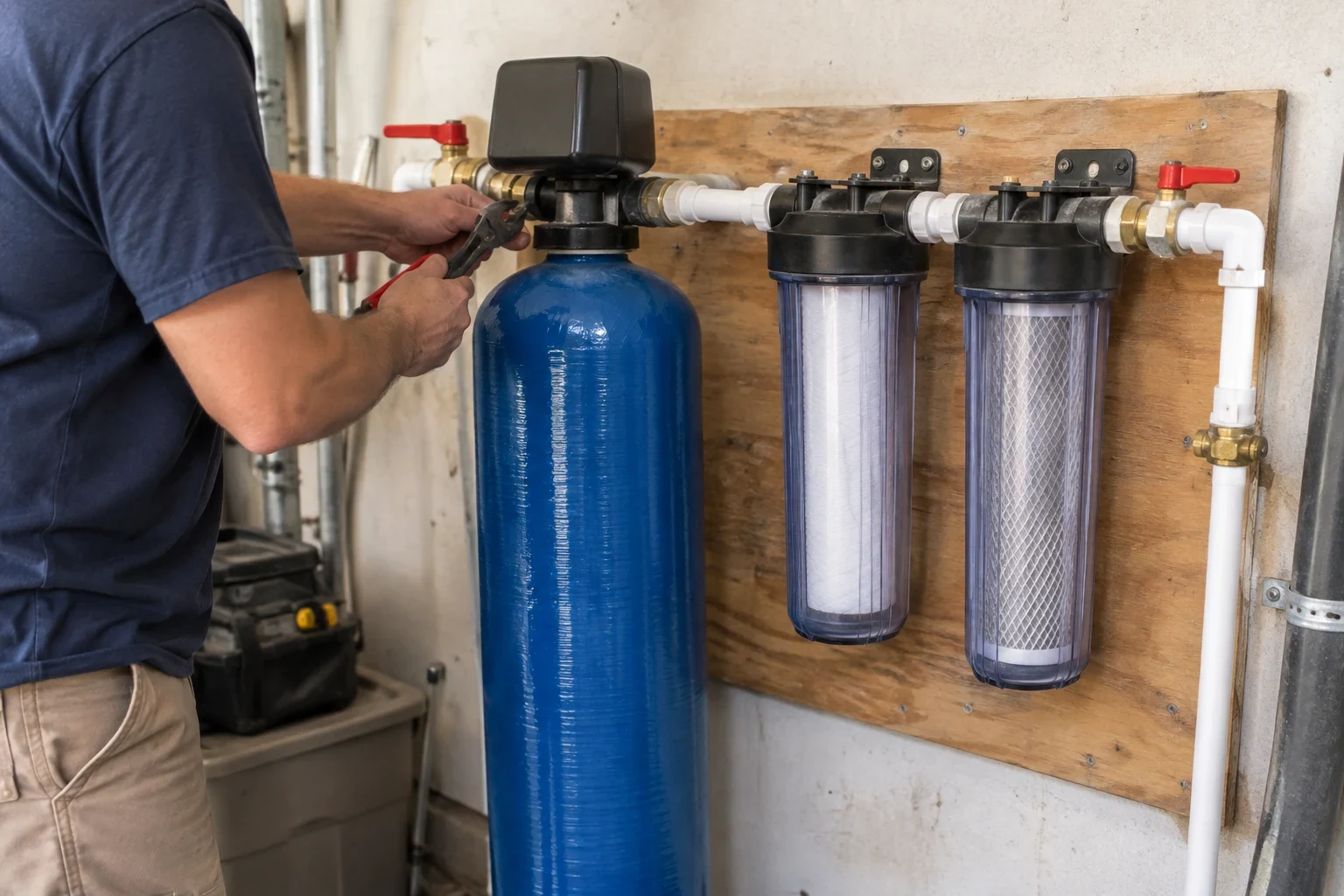
Treating water where the main line enters your home means the shower, the water heater, the washer and the kitchen tap all draw from one filtered supply. We size the tank to your plumbing, pick the carbon media that suits your water and tell you why we chose it.
What a point-of-entry filter does, and what it doesn't
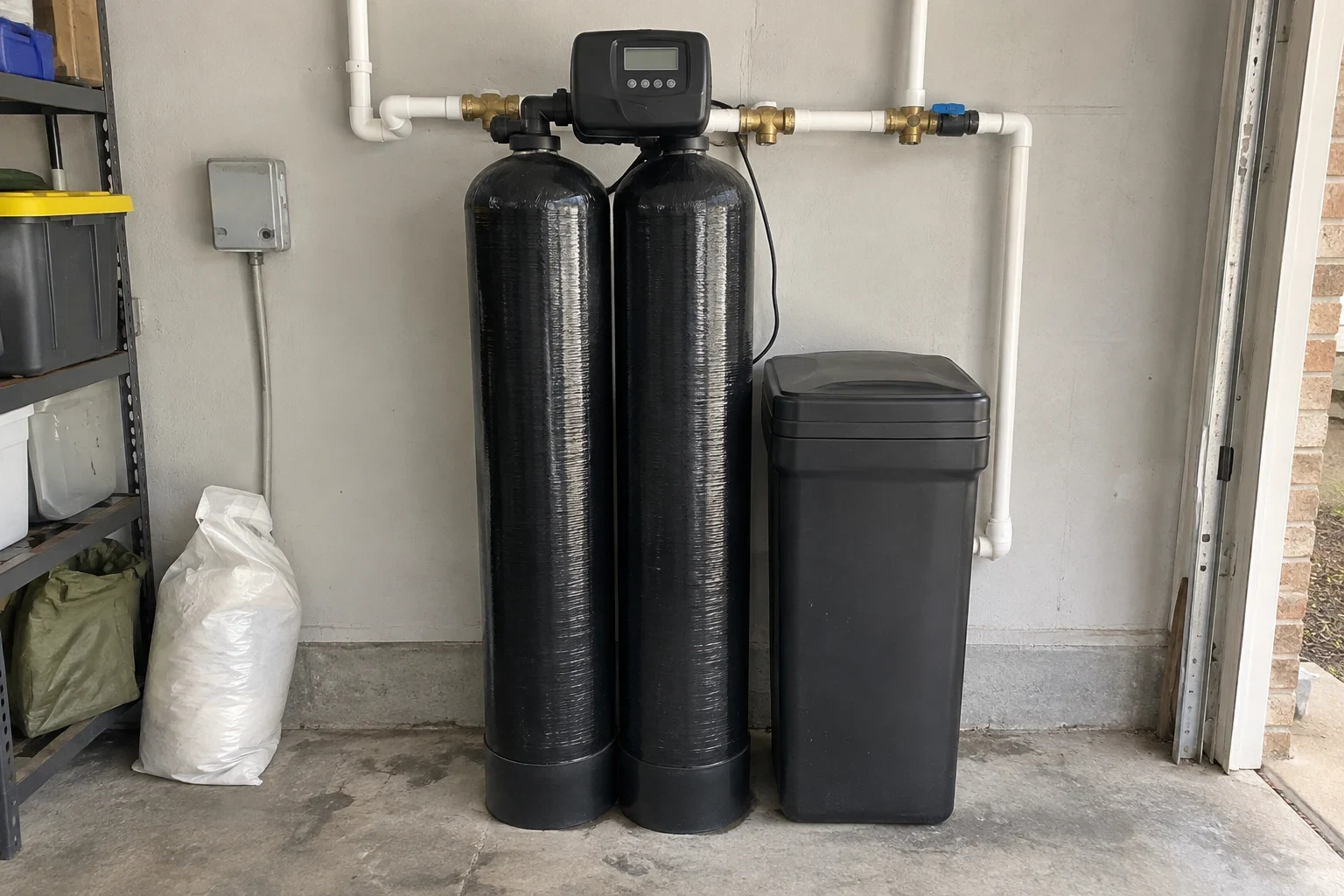
A whole-home system is a tall pressure tank, usually fiberglass-reinforced polyethylene, plumbed into the main line after the shutoff. Water passes through a bed of filter media before it branches to the rest of your home. The main job is removing the chlorine or chloramine your utility adds as a disinfectant, along with the taste and smell that come with it.
The media decides how well that works. Standard granular activated carbon handles free chlorine well. Chloramine is a tougher bond, and it needs catalytic carbon, a surface-modified carbon that breaks the chlorine-ammonia link much faster. Some systems add a layer of KDF-55, a copper-zinc granule that reduces chlorine and slows bacterial growth inside the bed.
A carbon system does not soften water and is not built to strip lead or dissolved solids. When hardness or lead is the real worry, we point you toward Water Softeners or Reverse Osmosis instead and explain the reasoning during the call. We have been in business 13 years, and most of what that time taught us comes down to matching the right media to the water.
What goes into the installation
Sediment prefilter
A cartridge housing ahead of the tank catches sand, pipe scale and rust flakes. We use pleated polyester when you want a washable element, or spun polypropylene when depth filtration matters more. It protects the carbon from clogging early.
Carbon tank sized to your flow
Media volume is measured in cubic feet, and it sets how long water stays in contact with the carbon. Too small a bed and chlorine slips through at peak use, like two showers running at once.
Upflow or backwashing head
Upflow tanks need no drain and no power. Backwashing heads flush the bed on a schedule, which keeps it from channeling but needs a drain line and an outlet. We explain the trade-off for where your plumbing sits.
Bypass loop and connections
Every install gets a three-valve or built-in bypass so you can keep water on during service. Connections match your pipe, whether copper or PEX, and we restore the ground bond if we cut into copper that carries the electrical ground.
Outdoor protection
Most homes here have the main line coming up outside, so the tank often sits against an exterior wall. We add a cover to keep sun off the fiberglass and insulate exposed fittings for the occasional hard freeze.
Signs a whole-home filter makes sense
- Pool smell from the shower
- Hot water releases chlorine as vapor, and a small bathroom with the door closed traps it. A carbon bed on the main line takes the chlorine out before it reaches the water heater.
- Dry skin and brittle hair
- Chlorine strips natural oils from skin and hair. Many people notice a difference within a few weeks once their shower water is filtered.
- Fading fabrics
- Chlorine in wash water slowly bleaches dyes. Filtering at the main line protects every load, not just one faucet.
- Too many under-sink cartridges
- If you keep replacing pitcher filters and faucet cartridges around the house, a single tank on the main line can take over most of that work.
- Debris clogging faucet tips
- When you unscrew an aerator or pull a washing machine inlet screen and find sand or rusty specks, sediment is moving through your pipes. A prefilter traps it before it wears down valves, cartridges and appliance parts.
How the job runs
- 1
Phone conversation
We ask how your utility disinfects the water, how many bathrooms you have, your line size and where the main comes in. That is usually enough to recommend a media and tank size. If something is uncertain, Water Testing answers it first.
- 2
Site check
We look at the entry point, the pipe material and whether a drain and an outlet are close by. Those details decide upflow versus backwashing and where the tank will stand.
- 3
Installation day
We close the main valve, plumb in the bypass loop and prefilter housing, set the tank on a level pad and tie it all into your line. Your water is typically off for a few hours in the middle of the job, and the rest of the day is unaffected.
- 4
Rinse-out and handover
Fresh carbon sheds fine dust, so we run water through the bed until it comes out clear, check every joint for leaks and then restore service to the house. Before leaving, we show you how the bypass works and where the prefilter housing opens.
What moves the price
Since we offer free installation, the figure we give you centers on equipment and parts. The biggest variables are the media and how much of it your home needs. We explain each line before you decide.
- Media type
- Catalytic carbon costs more than standard granular carbon. Adding KDF-55 raises it again. Which one you need depends on whether your supply uses chlorine or chloramine.
- Tank size and line size
- A 1-inch main serving several bathrooms needs more media and a larger valve than a 3/4-inch line in a smaller home.
- Control head
- A backwashing valve adds cost over a simple upflow head and needs a drain and power.
- Plumbing conditions
- Corroded fittings, an awkward entry point or a long run to a drain add parts and fittings.
Common questions about point-of-entry filters
- Does filtering the main line reduce pressure at my faucets?
- Not much, if the tank is sized right. A noticeable drop usually traces back to a media bed that is undersized for the household or a sediment cartridge packed with debris. We pick a valve that matches your line size, so flow at the fixtures stays close to what you get today.
- How often does the media need replacing?
- Carbon is rated by the number of gallons it can treat, so the interval depends on your household's water use and the chlorine level in the supply. Sediment cartridges need changing more often, typically once you see pressure begin to sag. Full services after the sale are part of what we offer, so we help you keep track of both.
- Will this system soften my water?
- No. Carbon does not pull out the calcium and magnesium that leave scale behind. If you see spotting or crust on fixtures, our Water Softeners page covers that equipment, and a test tells you whether your water actually needs it.
- Do I need reverse osmosis as well?
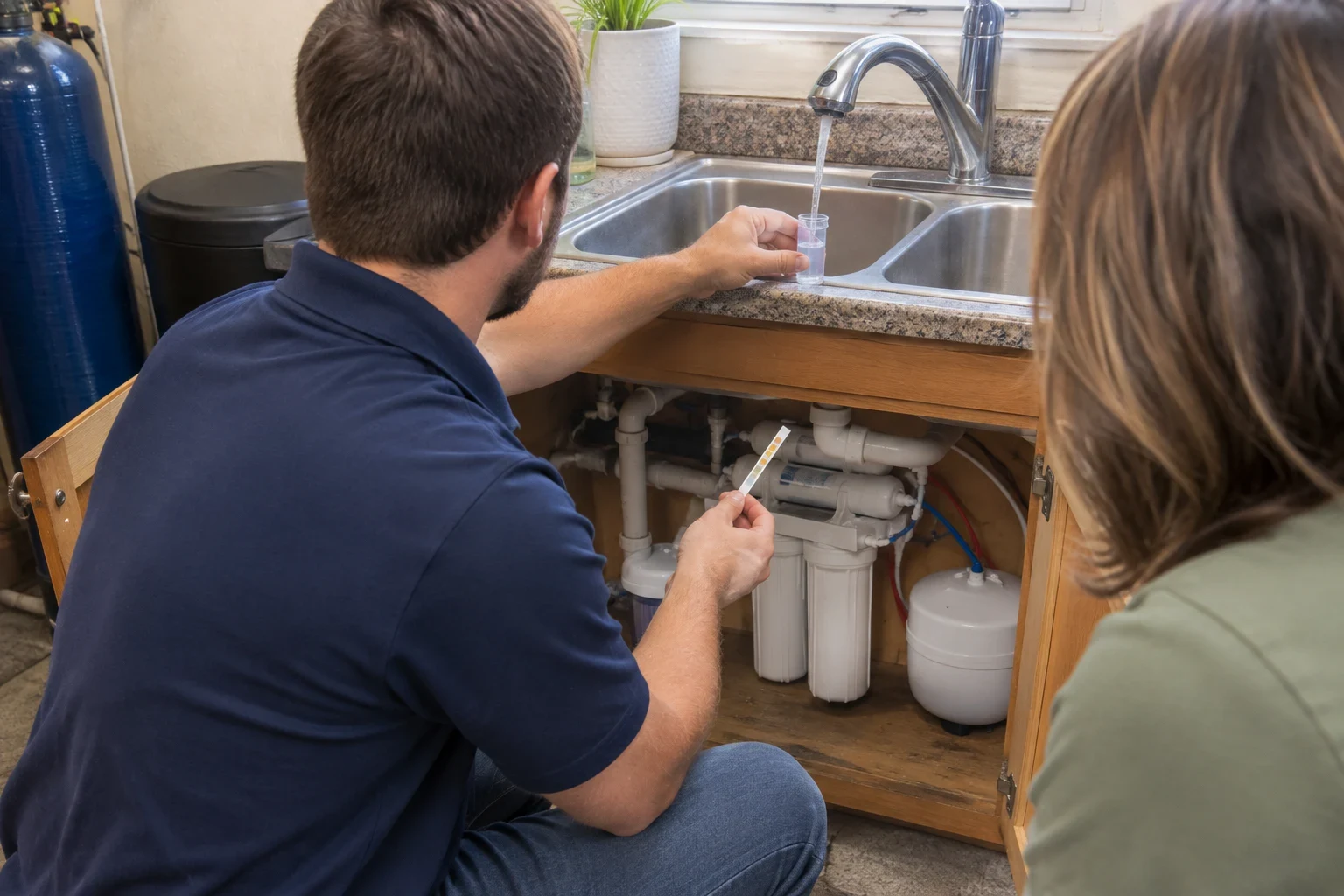
- Some families add it. The whole-home filter handles chlorine at every tap, while an under-sink Reverse Osmosis unit goes further on drinking and cooking water, including lead that older plumbing can shed. Many homes do fine with the whole-home system alone.
- What warranty comes with the system?
- Every whole-home system we install carries a lifetime warranty. On the phone, we can walk through exactly which parts and situations that coverage includes for the equipment you pick.
Find the right media for your water
Tell us your line size and how your water is treated, and we will explain which carbon fits and why. Installation is free, and we stay on for service after the sale.