ServicesAlkaline Water Systems
Alkaline Water Systems in Kemah
An alkaline system raises the pH of your drinking water and puts back minerals that filtration strips out. We explain how calcite, magnesium and ionizer units differ, test what comes out of your tap, and install the one that suits your kitchen.
What an alkaline system actually does
Most alkaline systems are a final stage at the kitchen sink. Water passes through a mineral bed or across charged plates, and the pH comes up, usually into the 8 to 9.5 range depending on the design. Water that has been through reverse osmosis is the most common candidate, because the membrane removes almost all dissolved minerals and leaves water that tastes flat and reads slightly acidic.
We will be straight about the claims. Alkaline water is a taste and mineral choice. We do not sell it as a cure for anything. What we can show you is the pH and total dissolved solids before and after, so you know the unit is doing what it should.
We have been installing drinking water equipment in Kemah and nearby towns like League City and Seabrook for 13 years, and most of the questions we get on this page come down to which mineral media to pick.
Your media choices and what comes with the install
Calcite (calcium carbonate)
Crushed calcite dissolves slowly into acidic water and stops dissolving as the pH approaches neutral to mildly alkaline. That self-limiting behavior makes it hard to overshoot. The trade-off is a modest pH rise and a little added calcium, which is the mineral that leaves spots on a kettle.
Magnesium oxide and magnesium blends
Magnesium media raises pH faster and further than calcite, and many people prefer the smoother taste. Used alone it can push pH higher than intended, so we usually pair it with calcite in one cartridge or a two-stage setup. It is depleted faster, so cartridge changes come sooner.
Electrolytic ionizers
An ionizer runs water across platinum-coated titanium plates and splits it into an alkaline stream and an acidic stream. It needs an outlet under or near the sink and a source of dissolved minerals to work with, so it pairs poorly with straight RO water. Scale on the plates is the main maintenance item.
Remineralizing stage for an RO system
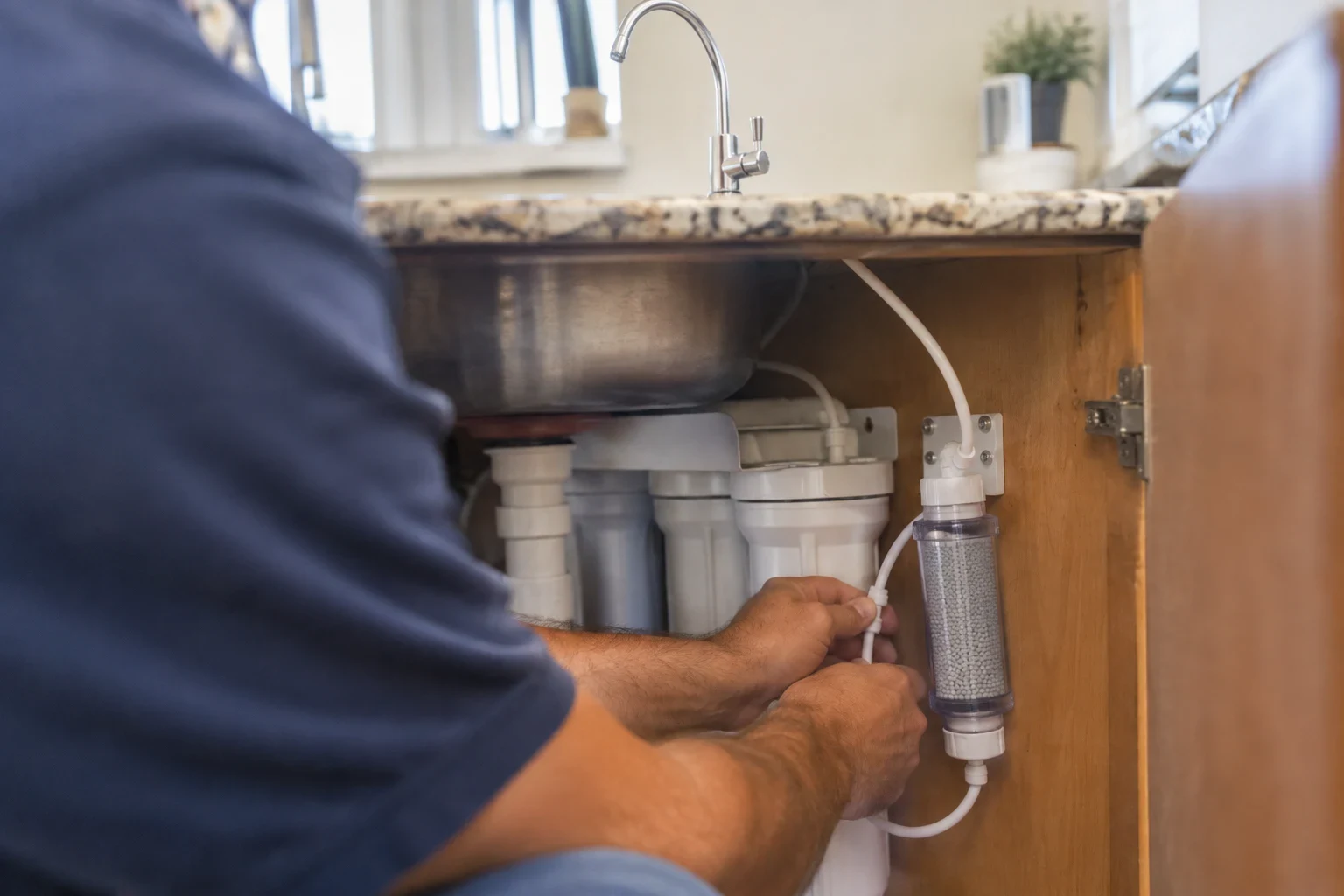
If you already have a unit from our reverse osmosis service, we can add an inline alkaline cartridge after the storage tank. It takes up very little cabinet space and uses the existing faucet.
Faucet, tubing and fittings
We run food-grade polyethylene tubing with push-fit connections and mount a dedicated drinking water faucet, drilling a new hole in the countertop if you do not have one.
Signs an alkaline stage makes sense in your home
- Your RO water tastes flat
- Reverse osmosis removes the calcium and magnesium that give water body. A mineral stage brings some of that back.
- You buy alkaline water by the case
- A sink unit replaces the bottles and the trips to carry them in.
- Your test shows low pH
- A reading below about 6.5 can be sharp on the tongue and hard on copper lines. Our water testing service tells you whether that is the case before you buy anything.
- Pitcher filters are not keeping up
- Alkaline pitchers use small media pouches that wear out quickly. A plumbed cartridge holds far more media and delivers on demand.
How the install day runs
- 1
A quick call to start
On the phone we ask what you are drinking today and what you would like to be different. That tells us whether a standalone unit or an add-on to filtration you already own is the better fit.
- 2
Baseline readings
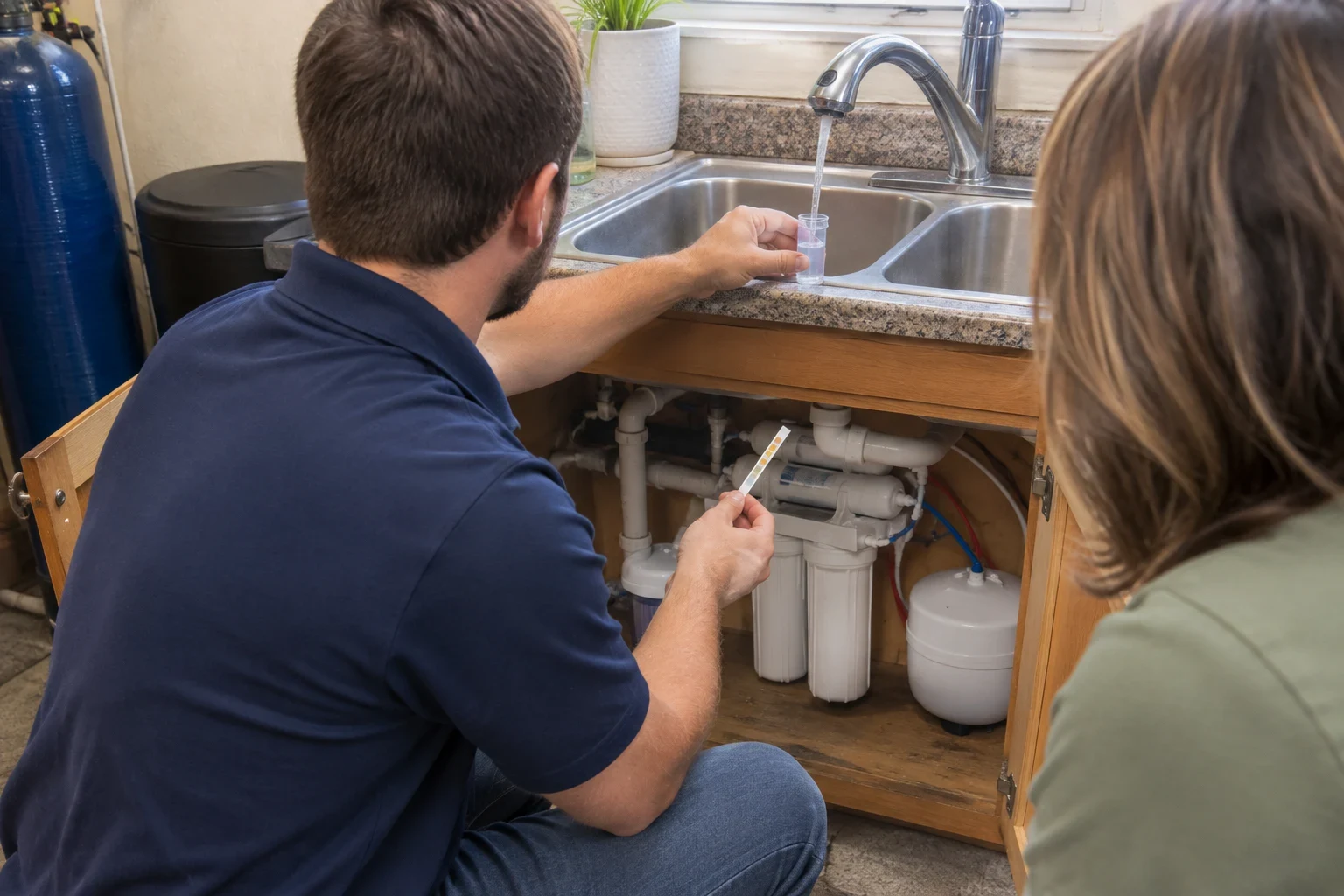
Once we are at your home, we check pH and total dissolved solids at the kitchen tap. Those numbers become the reference point for every later reading.
- 3
Installation under the sink
We mount the housing or ionizer, route the tubing, set the faucet and inspect each connection for leaks. Installation is free, and the cabinet and counter are cleaned up before we leave.
- 4
Readings you can see
After flushing the new media, we test pH and TDS again with you standing at the sink. We also show you how to remove the cartridge and the signs that it has run out.
What sets the price of an alkaline system
Because installation is free, the price mostly comes down to the equipment and how it fits your plumbing. An add-on cartridge for an existing RO unit is the simplest case. A standalone ionizer is the most involved. We give you the figure by phone once we know your setup.
- Type of media or unit
- Calcite cartridges are the simplest. Magnesium blends and multistage housings cost more, and electrolytic ionizers sit at the top because of the plates and electronics.
- What it connects to
- Adding a stage to an RO system already under your sink takes fewer parts than building a full drinking water line from scratch.
- Countertop and cabinet
- Quartz and granite need a diamond bit for a faucet hole. A cramped cabinet or a garbage disposal in the way can change which housing we use.
- Replacement schedule
- Magnesium media depletes faster than calcite. We walk through the ongoing cartridge cost so the first purchase is not the only number you hear.
Alkaline water questions we hear most
- Does drinking alkaline water do anything for my health?
- That is not a promise we put on any unit we sell. People who choose an alkaline stage mostly want the smoother taste and the bit of calcium and magnesium it adds back. Taking contaminants out is the job of filtration, usually reverse osmosis, and the alkaline cartridge sits after it.
- Can you add an alkaline stage to the reverse osmosis unit I already have?
- Usually, yes. On a typical under-sink RO system, the remineralizing cartridge goes inline between the storage tank and the drinking faucet. Before we bring parts, we check the tubing size and fitting style, either on the phone or once we are at your sink.
- How long does an alkaline cartridge last?
- It depends on the gallons you draw each day and the media inside. Calcite lasts longer, while magnesium wears down faster. When the pH at the faucet drops back toward the baseline we recorded on install day, the cartridge is spent and ready to swap.
- Does an alkaline unit change the water everywhere in my home?
- No, it treats only the water coming out of the kitchen faucet it feeds. If acidic water is affecting plumbing across the house, that needs a point-of-entry system instead. We cover that through our whole-home filtration and well water treatment services.
- What support do I get once the system is in?
- Each unit comes with a lifetime warranty, along with full services after the sale. If a push-fit connection starts to drip or the pH reading wanders, you reach the same company that did the install.
Choose the mineral that suits your tap
Let us know how your drinking water is set up today, whether that is bottles, a pitcher or an RO unit under the counter. We will compare calcite, magnesium and ionizer options for that setup and lay out the running cost of each.