ServicesWater Testing
Water Testing in Kemah
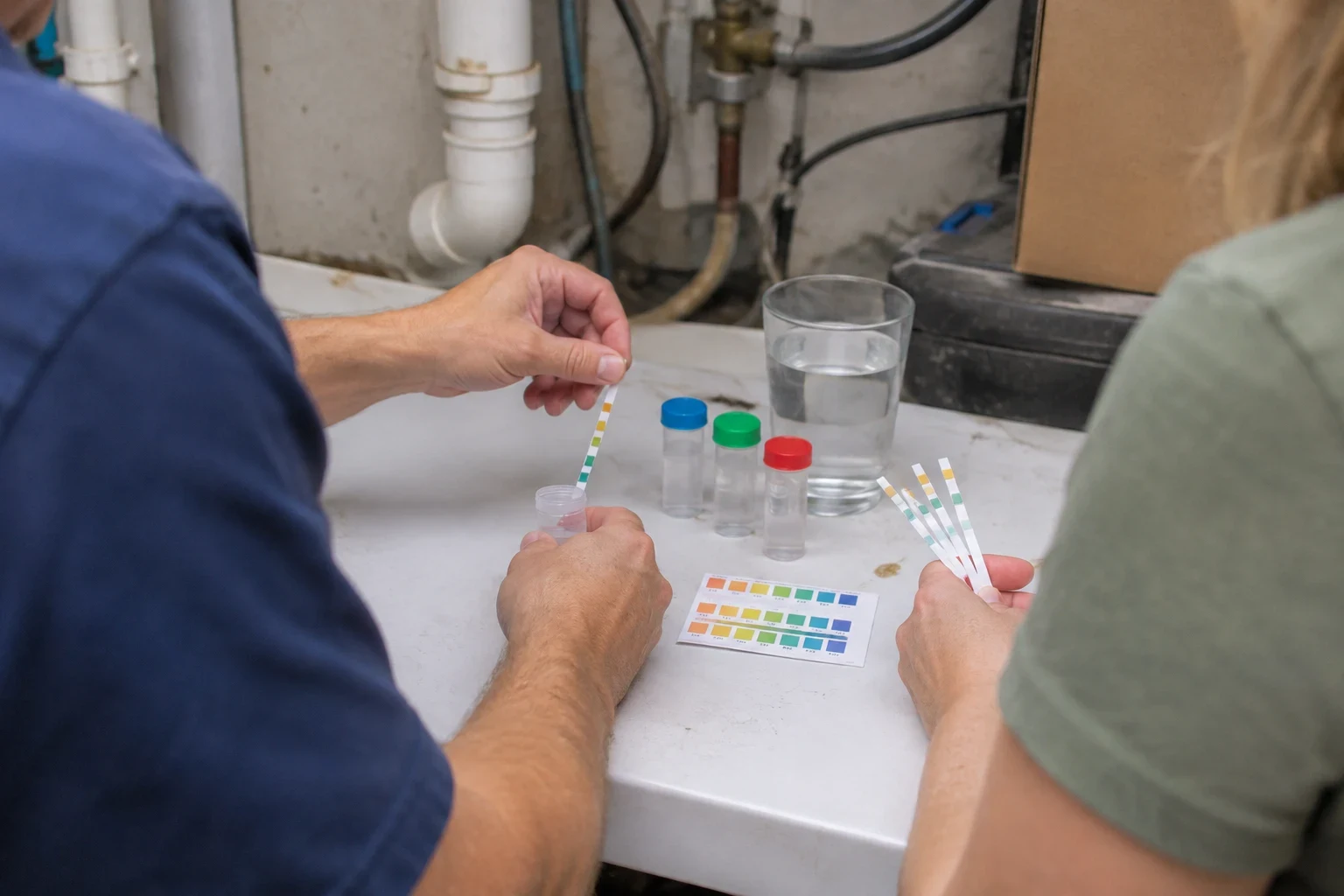
Before anyone sells you a softener or a carbon tank, you should know what is in your water. We test hardness, chlorine, iron, pH and dissolved solids at your tap, then show you the numbers and tell you which filter materials would actually address them.
Numbers first, equipment second
Every filter medium removes a specific set of things. Activated carbon grabs chlorine and many organic compounds but does almost nothing for hardness. Ion-exchange resin removes calcium and magnesium but leaves chlorine alone. A reverse osmosis membrane rejects most dissolved solids, including lead, but is sized for a single tap. Picking the wrong one means paying for a system that treats a problem you do not have.
A test tells us which of those materials fits your home. City water and private well water behave very differently, and two houses on the same street can show different results because of their own pipes, water heater and fixtures.
We have been in business 13 years, and the habit that has served our customers best is simple: measure, explain and only then recommend.
What a water test from us covers
- 01
Hardness by titration
We measure calcium and magnesium in grains per gallon. That figure decides if a softener makes sense at all, and if it does, how large the resin bed needs to be.
- 02
Free and total chlorine
A DPD reagent test shows how much disinfectant reaches your tap. Separating free from total chlorine hints at chloramine, which matters because standard carbon handles chloramine poorly and catalytic carbon handles it much better.
- 03
Iron, manganese and pH
These three account for most staining and metallic taste. A low pH also tells us the water may be pulling copper out of your pipes, which shows up as blue-green marks in sinks and tubs.
- 04
Total dissolved solids
A handheld TDS meter adds up the minerals and salts carried in the water and reports them in parts per million. That reading becomes our baseline for checking a reverse osmosis membrane after it goes in.
- 05
Lab work when it is needed
Lead, bacteria, nitrates and other contaminants need a proper lab analysis, not a test strip. When your situation calls for it, we walk you through collecting the sample and go over the lab report with you once it comes back.
Questions about Water Testing?
Call(281) 688-9298Signs it is time to test your water
Chlorine smell from the tap
A pool-like odor, strongest first thing in the morning, points to disinfectant levels you may want to reduce with carbon.
White crust on fixtures
Scale on shower glass, faucet aerators and kettle bottoms is calcium carbonate. A hardness number tells you if it is worth softening or just cleaning.
Orange, brown or blue-green stains
Rust-colored stains usually mean iron. Blue-green usually means copper leaching from pipes, often a pH issue.
Rotten-egg odor or salty taste
In well water, a sulfur smell suggests hydrogen sulfide, and a salty or brackish taste suggests high dissolved solids. Both change which treatment media will work.
Older plumbing or a new baby
Homes plumbed before lead solder was banned, or a household with an infant or a pregnancy, are good reasons to get a lab test for lead.
How a test visit runs
- 1
A short call
On the phone we ask where your water comes from, a municipal line or a private well, along with the changes you have noticed and the approximate age of your pipes. Those details tell us which test kits to bring.
- 2
Samples where they tell the most
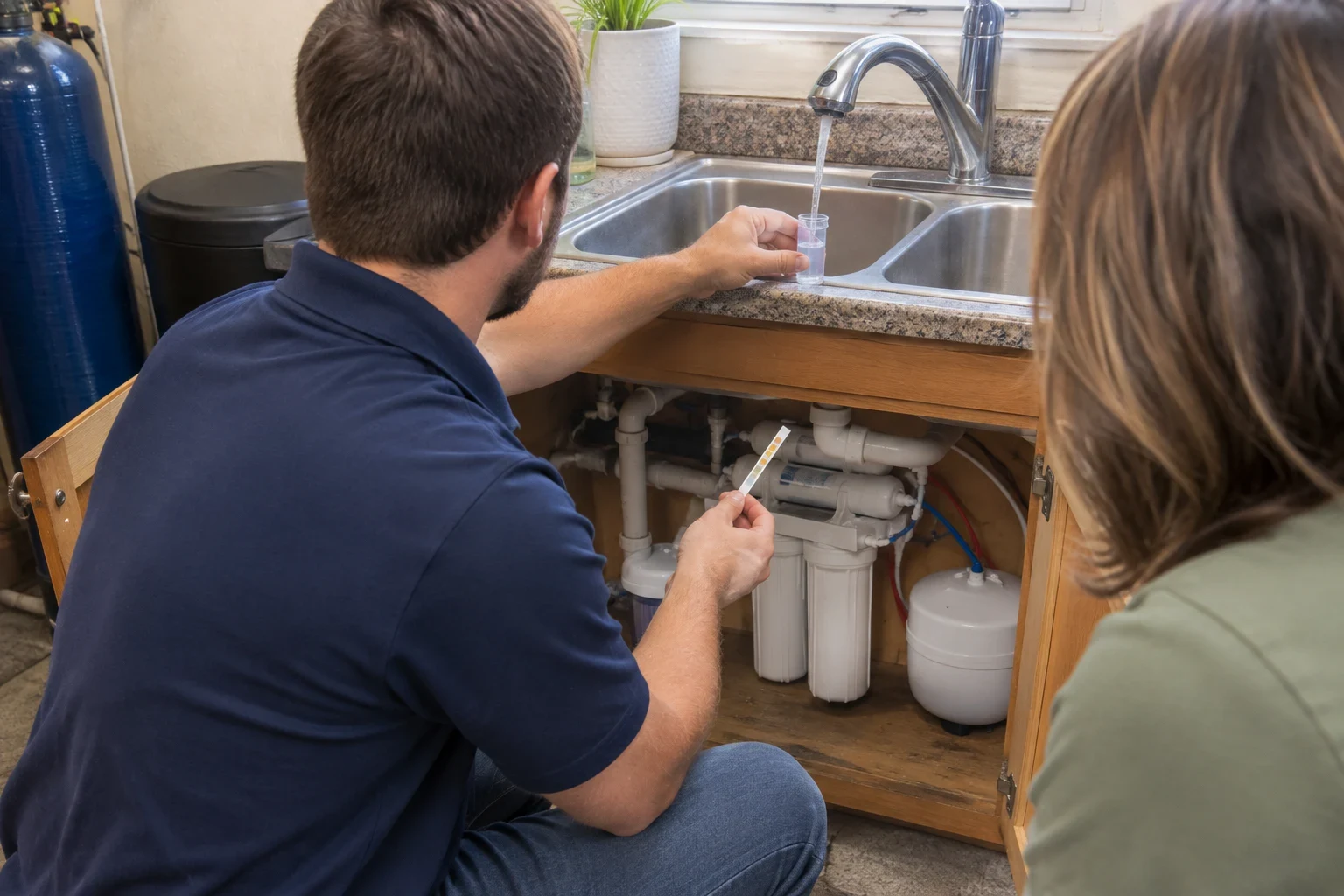
The kitchen faucet shows what your family drinks. We also pull a sample ahead of the water heater, because a tank can collect sediment and skew iron and hardness readings. On a well, we add a sample at the pressure tank.
- 3
Results at your kitchen table
On-site tests take minutes. We write down every reading and go over what each one means, including the ones that came back fine.
- 4
An honest recommendation
If the numbers support a system, we tell you which media fits and why. If your water does not need treatment, we say so.
What affects the cost of water testing
Testing is priced by how much we need to measure and how we measure it. A city home with a taste complaint needs far less than a well with staining and odor. You get the cost on the phone before we visit.
- Number of parameters
- A basic panel of hardness, chlorine, pH, iron and TDS is quicker than an extended look at manganese, sulfur and alkalinity.
- On-site versus lab analysis
- Lead, bacteria and nitrates require a lab, which adds handling and lab fees.
- City water or well
- Wells usually need more tests and a sample at the pressure tank, and bacteria testing is wise after flooding or repairs.
- Follow-up testing
- A retest after installation confirms the system is working. If we install equipment, we include that check as part of our full services after the sale.
Water testing questions
My city already tests the water. Why test at my tap?
Utility sampling happens at treatment facilities and at selected spots across the distribution network. Those results stop at your meter, so they say nothing about your service line, interior pipes or water heater. Lead, copper and many taste issues start inside the house itself, which is why your faucet is the place to measure.
Will you push a system on me after the test?
You get every reading in writing, and any recommendation follows from those numbers. If they point to a carbon filter, a softener or reverse osmosis, we explain the trade-offs of each material. If nothing needs treating, we tell you that plainly.
Do I need a test before buying a water softener?
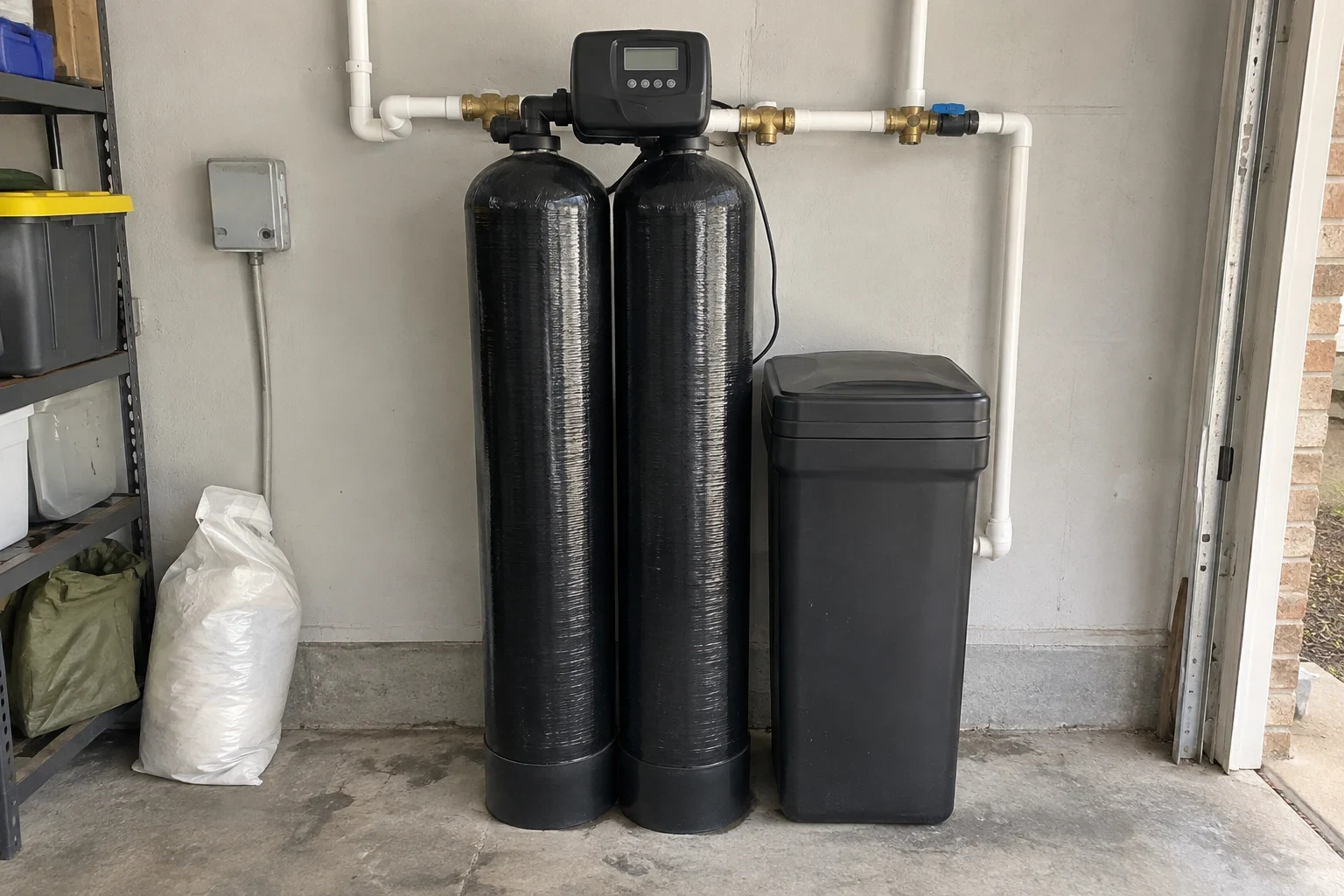
Yes. Softener size depends on hardness and how much water your home uses. Without a hardness reading, a unit is either oversized and wastes salt or undersized and lets hardness through.
Does your test check for lead?
A reliable lead result needs a lab. We can show you how to take a first-draw sample, which is water that has sat in the pipes overnight, and help you read the report.
What happens if I go ahead with a system?
Installation is free, and the systems we install carry a lifetime warranty. We also stay on for full services after the sale, including filter changes and a retest to confirm the results.
Get real numbers for your tap water
Start with the stain, smell or taste that has been bothering you. We will pick the tests that fit your home, in Kemah or nearby towns such as League City and Seabrook.