ServicesWell Water Treatment
Well Water Treatment in Kemah
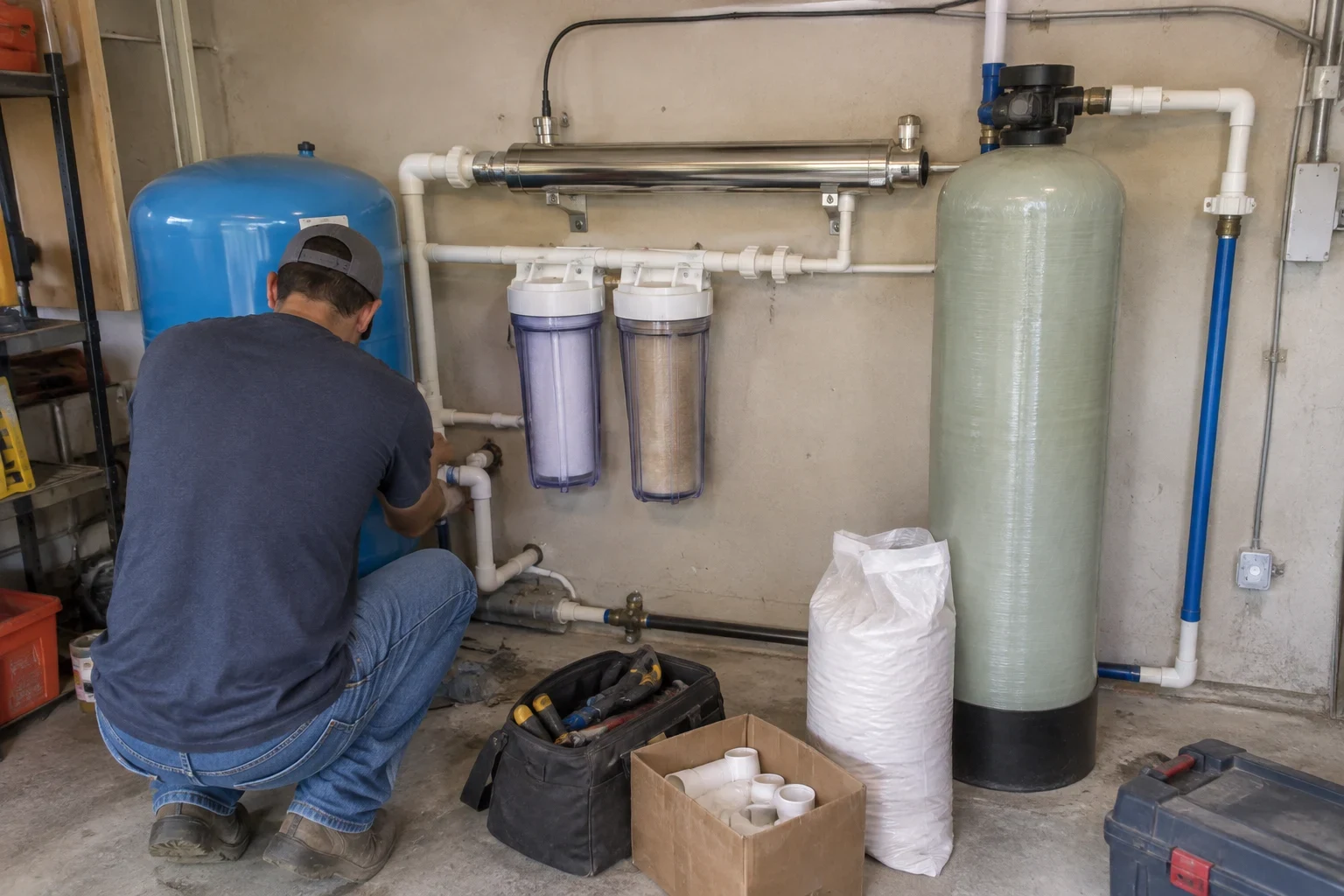
We treat private well water stage by stage. Sediment comes out first, then iron and sulfur, then bacteria, with each piece of equipment chosen from your lab results. You get clear, odor-free water at every tap and a plain explanation of why each part is there.
What well treatment does and when it fits
A private well delivers whatever the ground puts into it. No utility treats that water before it reaches your home, so iron, manganese, hydrogen sulfide, sediment and bacteria arrive at the tap unchanged. Well water treatment is a short train of equipment, each stage aimed at one problem, plumbed in where the line leaves your pressure tank.
Order matters. Sediment is removed first so it cannot foul the media downstream. Iron and sulfur are oxidized and filtered next. A softener follows only if your hardness calls for one, and a UV lamp sits last so its light passes through clear water. Wells near the bay can also pick up salt, which no whole-house filter media removes. That job belongs to a reverse osmosis unit at the kitchen sink.
We have been in business 13 years, and the lesson holds: two wells a short drive apart can need completely different equipment. So we test before we recommend anything.
Equipment we install and how each material behaves
Sediment prefiltration
A spun polypropylene cartridge is cheap and simple but clogs fast on sandy wells. A backwashing sediment tank costs more up front, cleans itself on a timer and suits wells that push grit after heavy pumping.
Iron and manganese removal
Birm media is light and chemical-free but needs a pH near 6.8 or higher and enough dissolved oxygen to work. Greensand Plus handles higher iron and manganese loads but regenerates with chlorine or permanganate. An air injection filter holds a pocket of air in the tank to oxidize iron with no chemicals at all, which is why we often start there.
Hydrogen sulfide control
Catalytic carbon handles a light rotten-egg odor. Heavier sulfur needs air injection or a chlorine feed with a contact tank, followed by carbon to strip the leftover chlorine.
UV disinfection
A UV lamp inside a stainless chamber, behind a quartz sleeve, kills bacteria without adding anything to the water. It leaves no residual in your pipes and only works on clear water, so it always goes last. The lamp is replaced once a year.
pH correction and softening
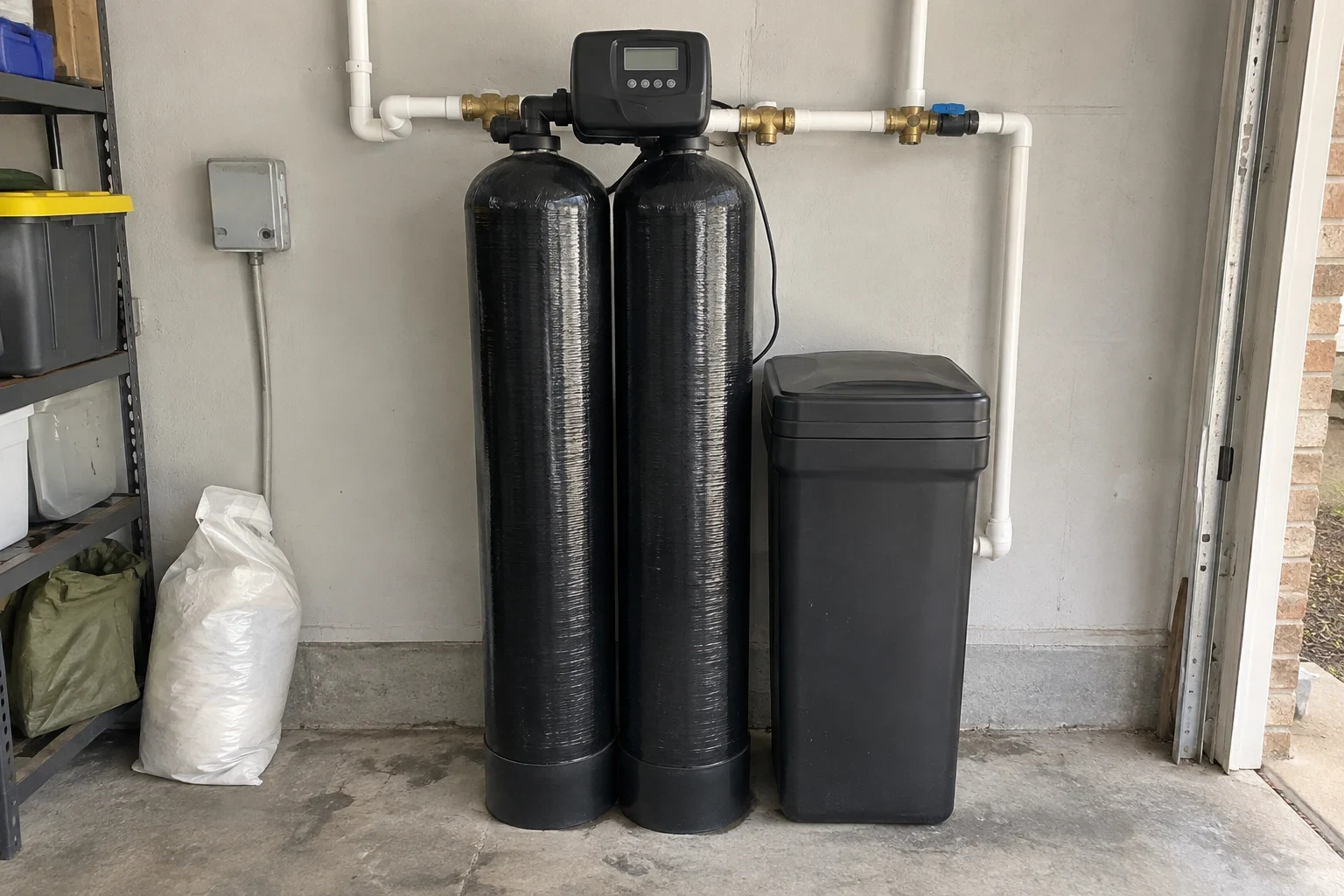
Acidic well water slowly dissolves copper pipe. A calcite neutralizer tank raises the pH as water passes through. A softener is added only when the test shows real hardness; see our Water Softeners page for how we size one.
Bypass, drain and controls
Every tank gets a bypass valve so you keep water during service, plus a drain line sized for the backwash flow and a control valve set to your household use.
Clues your well water has a problem
Rust stains on fixtures and laundry
Orange-brown marks in the toilet bowl or on white clothes typically show iron at or above roughly 0.3 mg/L, which is where staining begins.
Dark specks or a gray coating
Black grit on faucets and a dark film inside the toilet tank usually point to manganese, a mineral that commonly shows up alongside iron.
A sulfur smell
When both hot and cold taps smell like rotten eggs, hydrogen sulfide is coming from the well itself. If only the hot water smells, bacteria reacting with the magnesium anode in the water heater could be to blame.
Green or blue marks under faucets
That color comes from copper. Acidic water is slowly dissolving the pipes in your home.
Brackish or flat-tasting water
A salty taste hints at chloride or high dissolved solids. That needs its own test, and the usual answer for drinking water is reverse osmosis.
Floodwater over the wellhead or a bad bacteria result
If a Gulf storm has submerged the well cap, treat the water as contaminated until a lab confirms it is clean.
How a well treatment job runs
- 1
Call and lab test
On the phone we ask about well depth, pump, pressure tank and what you are seeing. The sample is checked for iron, manganese, pH, hardness, hydrogen sulfide, dissolved solids and bacteria. Our Water Testing page covers the details.
- 2
Recommendation by material
We go over each stage and why that media fits your numbers, birm versus greensand, carbon versus air injection. You see the trade-offs in upkeep before choosing.
- 3
Installation day
Installation is free. We shut the pump off at the pressure switch, plumb the tanks after the pressure tank with a bypass, run the drain and set the backwash schedule. If bacteria showed up, we shock-chlorinate the well and flush the lines.
- 4
Retest and ongoing service
We retest after the system settles in to confirm it works. Full services after the sale cover media changes, UV lamps and adjustments as your water changes.
Why well system prices vary
Every private well has its own chemistry, so your price comes after the lab results, not before. The biggest driver is how many treatment stages your water calls for. Next is the ongoing upkeep each media brings with it. We explain each line item to you over the phone.
- Your lab results
- A well with only iron may be handled by a single tank. Add sulfur, acidic pH and bacteria, and the train can grow to three or four stages.
- Pump flow and peak demand
- We size each tank to your pump's flow rate and to the busiest hour in your home. Too little media lets iron break through when the shower and washer run together.
- Chemical-free or chemical-fed
- Birm and air injection run without supplies. Greensand and chlorine feed setups need a metering pump, a contact tank and a steady supply of chemicals.
- Installation site
- How much room the garage or pump house offers, how close a drain is for backwash water and where the nearest outlet sits for the control valve and UV lamp all shape the install.
Questions about treating well water
Something not covered here? (281) 688-9298
Can I skip the test and just buy a filter?
We advise against it. Birm stops working in acidic water, carbon is used up quickly by heavy sulfur, and a UV lamp cannot disinfect water clouded by iron. The lab numbers show which materials will hold up in your well and which would be money spent for nothing.
Will a single tank take out iron and sulfur together?
In many wells it will. An air injection filter oxidizes both iron and hydrogen sulfide inside one tank when the levels are moderate. When either one runs very high, it usually gets its own stage.
What maintenance should I expect after installation?
That comes down to the media you choose. Backwashing tanks largely take care of themselves on a timer. The UV lamp gets replaced each year and its quartz sleeve wiped clean, while cartridge filters are changed as they fill. Greensand and chlorine feed systems also need their chemical topped up.
Does a warranty come with the system?
It does. Well treatment equipment we install comes with a lifetime warranty. On the call we explain how that coverage applies to the specific equipment in your system.
Can whole-house treatment take the salt out of my well water?
It cannot. Chloride slips straight through iron media, carbon and softener resin. A reverse osmosis unit under the kitchen sink strips it from the water you drink and cook with, and our Reverse Osmosis page describes how that unit works.
Get a clear read on your well
Describe the stains, smells or tastes you have noticed, and we will walk you through which tests and which media make sense for your well. Installation is free, and full services after the sale keep the system working.