Kemah, TX
Kemah Water Filtration Built From the Right Media
We install whole-home filtration, water softeners, reverse osmosis and well water treatment in Kemah and nearby towns like League City and Seabrook. Before you pick a system, we show you what is inside the tank or housing, from catalytic carbon to ion exchange resin, and what each material actually removes from your water.
- Free installation
- Full service after the sale
- Every filter media named
- Sized to your home's flow
Water Treatment Work, Down to the Parts
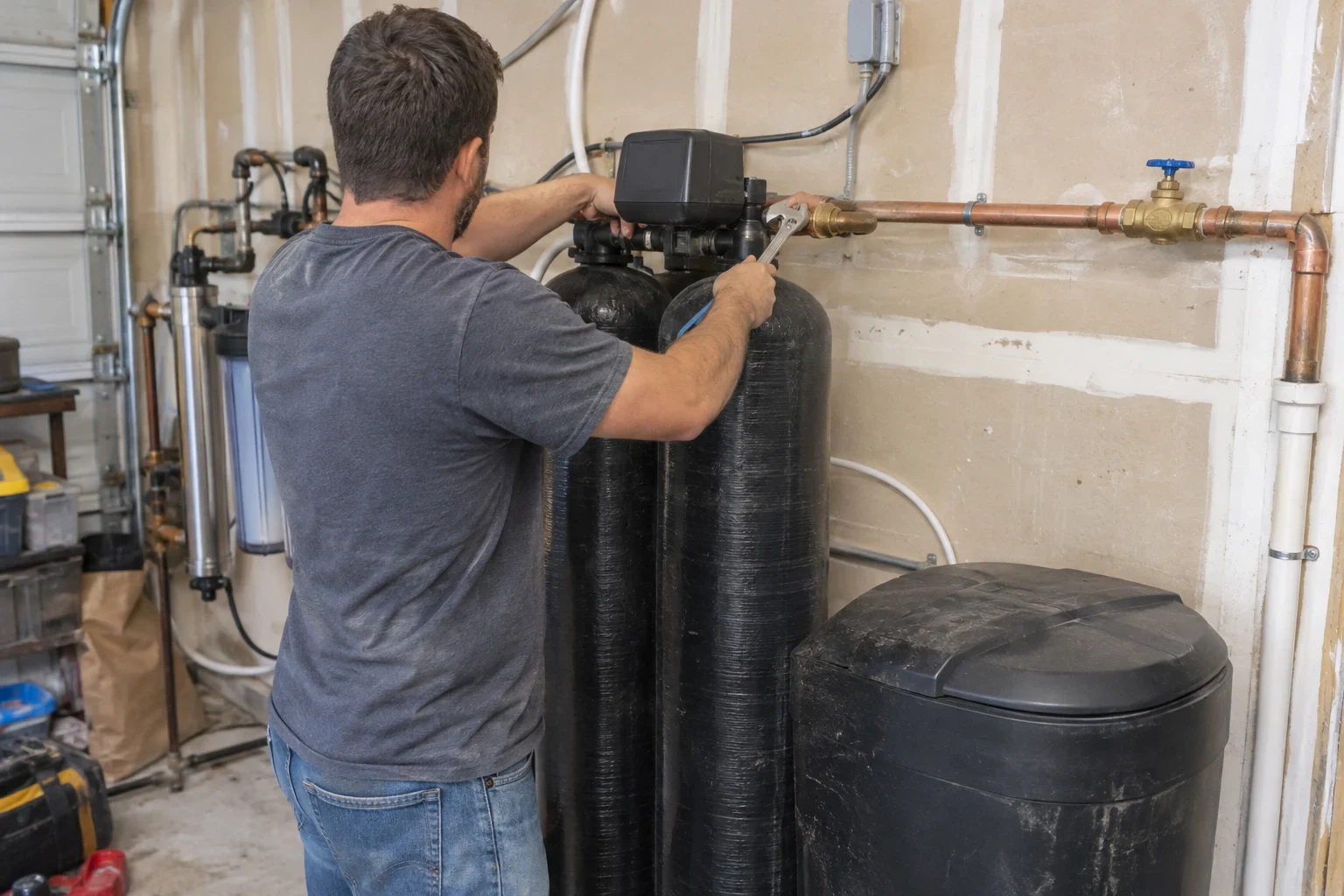
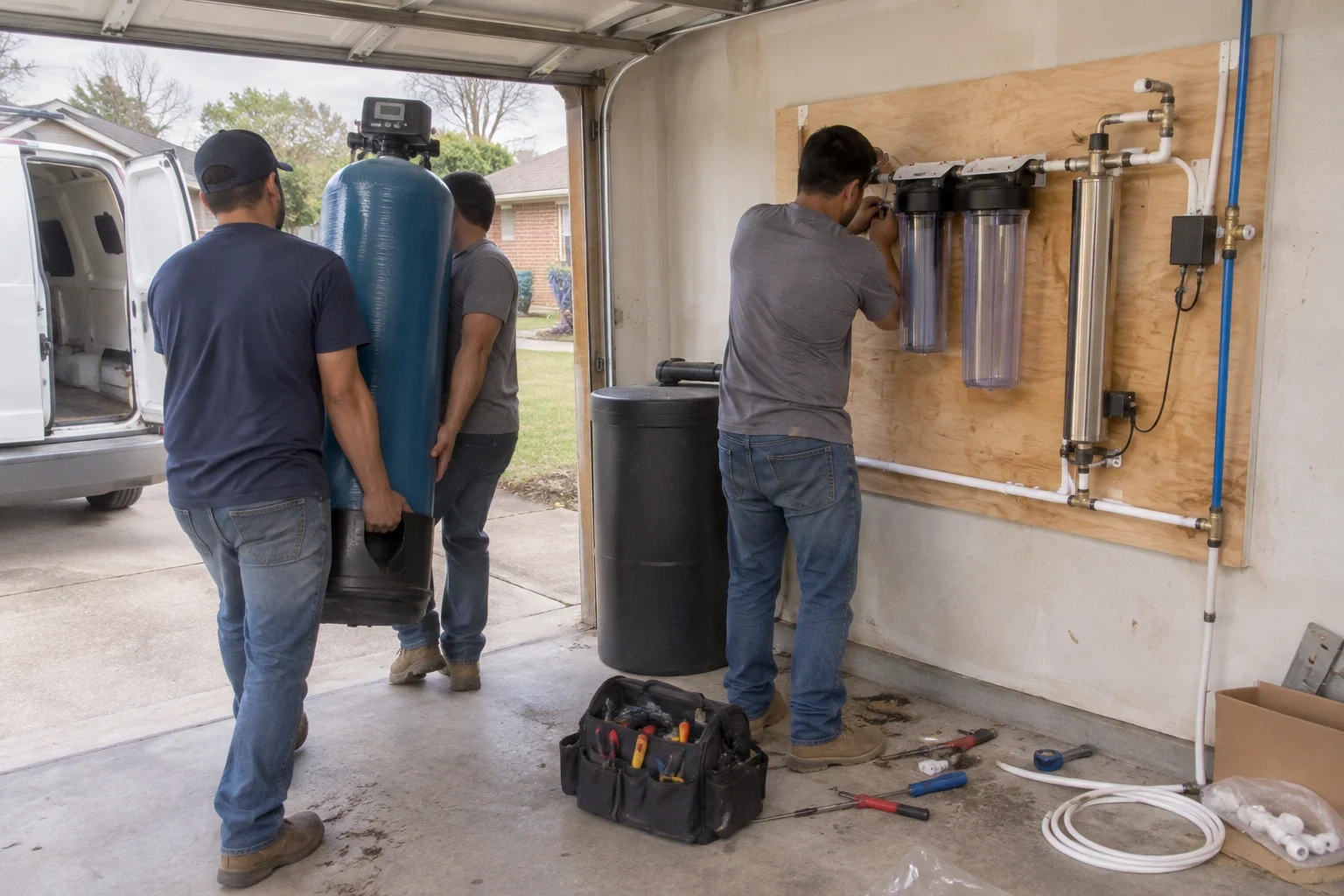
Water Filtration Kemah installs and services water treatment equipment inside homes around Galveston Bay. Our work is mostly unglamorous: cutting into copper or PEX lines, setting control valves, flushing carbon and programming regeneration cycles on softeners.
We spend time on the material side because that is where most filter problems start. A carbon filter that gives up early often used the wrong carbon for chloramine. A softener that leaves spots was usually sized for the wrong hardness. A reverse osmosis faucet that slows to a trickle tends to have a fouled prefilter sitting in front of a healthy membrane. When you know why parts fail, you can choose ones that won't, and we want you to have that knowledge before you buy.
- In business
- In business 13 years
- Warranty
- Lifetime warranty
Water Treatment Systems We Install
Each system on this list works because of what sits inside it. Whole-home filtration relies on carbon, water softeners on resin beads, reverse osmosis on a thin-film membrane and alkaline water systems on mineral cartridges. Well water treatment often combines several of these, which is why water testing usually comes first. Pick a service below to see how each one is built and where it fits.
Whole-Home Filtration
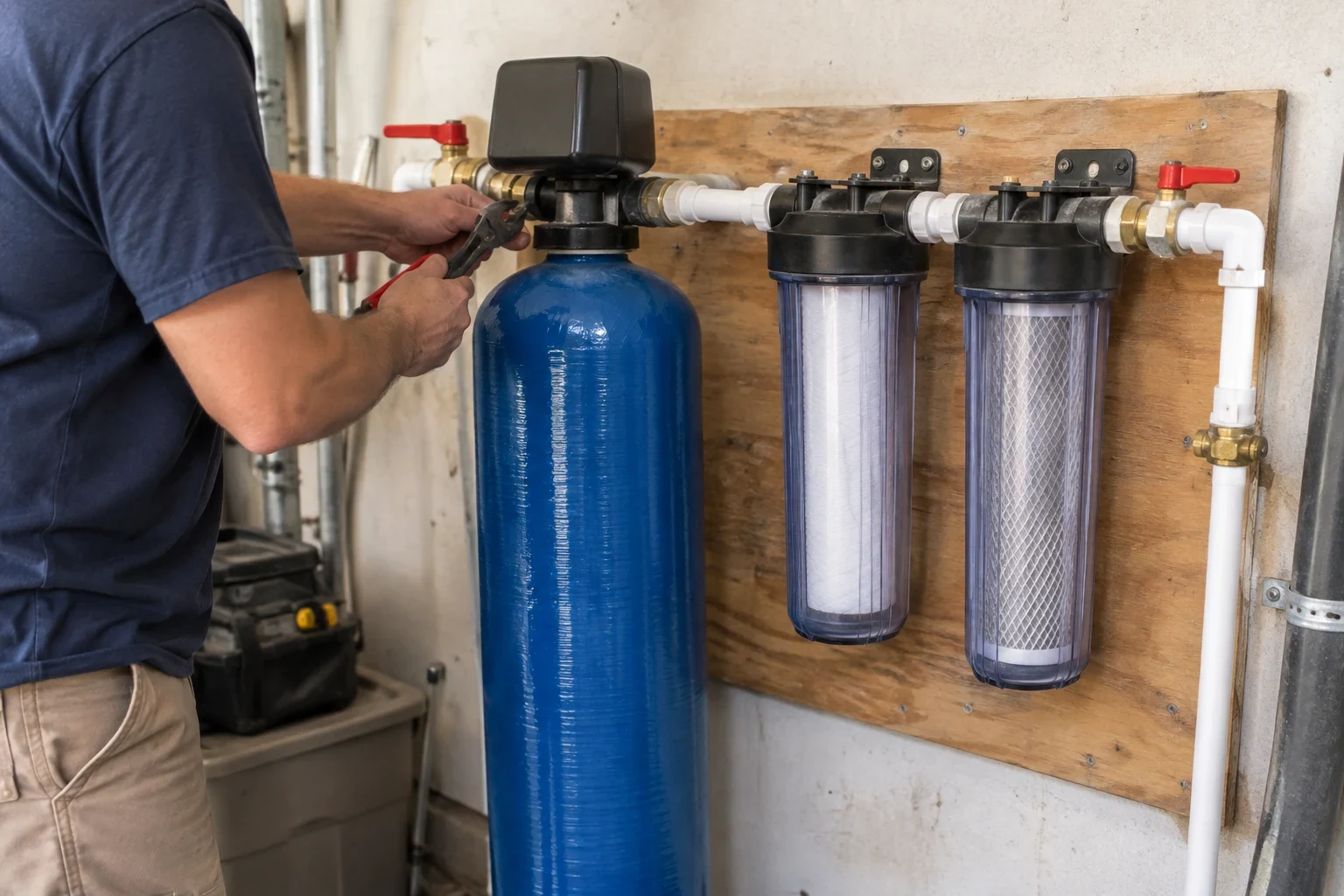
Point-of-entry carbon systems that cut chlorine taste and odor at every tap, with the media matched to how your water is treated.
Water Softeners
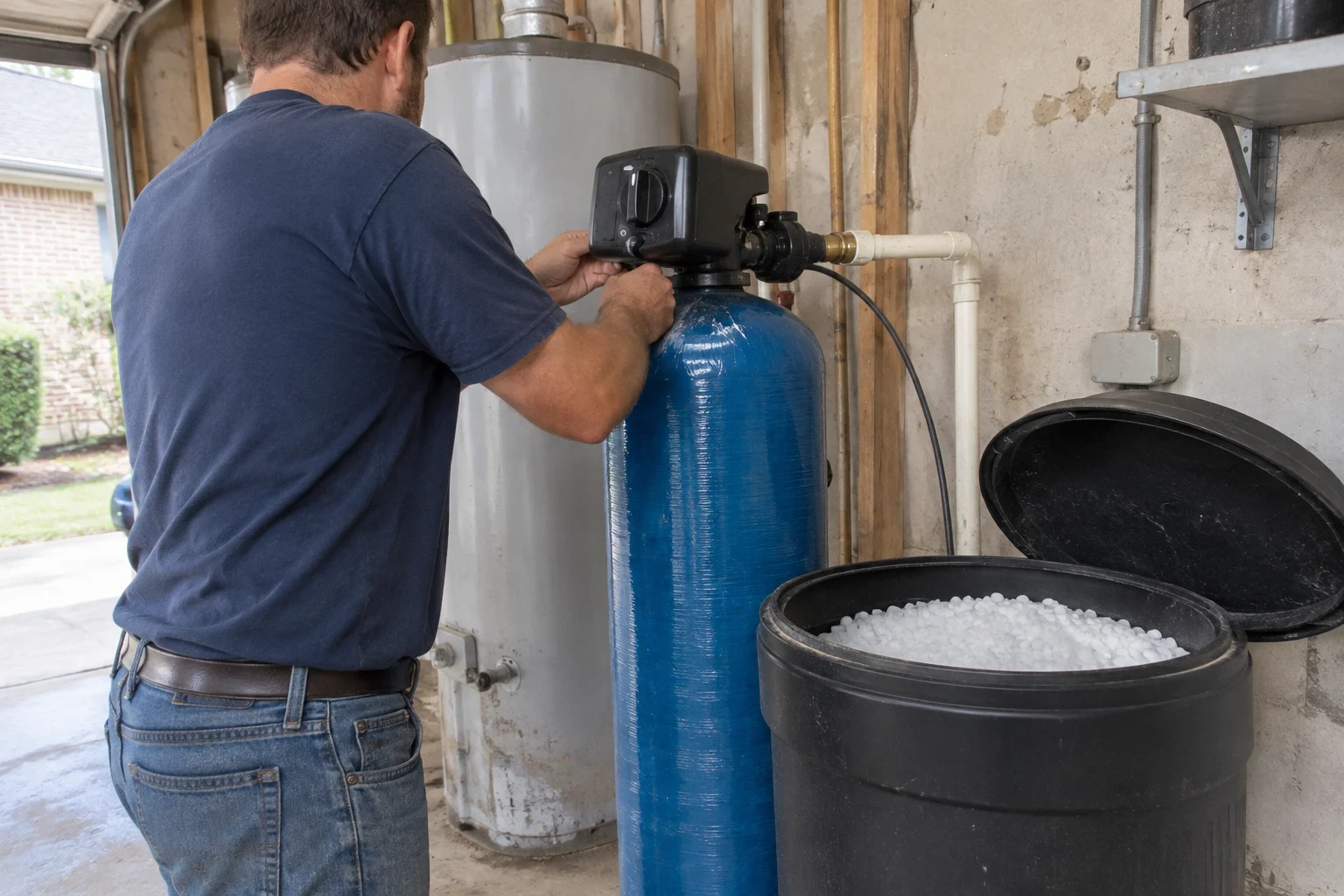
Ion-exchange softeners sized from your hardness numbers, with resin grade, control valve and salt type explained before anything goes in.
Reverse Osmosis
An under-sink reverse osmosis system for cleaner drinking and cooking water, with the membrane, filters and tank chosen to suit your water and your cabinet.
Well Water Treatment
Iron, manganese, sulfur odor, acidic water and bacteria removed from private wells with equipment picked to match what a lab test actually finds.
Water Testing
We measure what is actually in your tap water, then show you which filter media, if any, would change it and why.
Alkaline Water Systems
Calcite, magnesium oxide or an electrolytic ionizer: we explain how each raises pH and adds minerals, then install the one that fits your sink.
Where We Work
We are based in Kemah and install systems throughout the bay area, including League City, Dickinson, Seabrook and Webster. We also work in Bacliff, San Leon, Nassau Bay, Taylor Lake Village, El Lago and La Porte. Some of the houses we visit draw from a utility main and others pull from a private well, and we set up treatment for either supply.
- Kemah
- League City
- Dickinson
- Seabrook
- Webster
- Bacliff
- San Leon
- Nassau Bay
- Taylor Lake Village
- El Lago
- La Porte
If your home sits a little past these towns, phone us and you will get a straight yes or no on coverage.
What Moves the Price of a System
Two systems that look alike from the outside can differ a lot in what is inside them. The media, the volume of it and the way it connects to your plumbing drive most of the cost. Here is what we look at before we quote.
We give your quote by phone, with each component and its media named. Installation is free, so the number you hear reflects the equipment itself.
- Type of media
- Catalytic carbon costs more than standard granular carbon, and fine-mesh resin costs more than standard-grade resin. You pay for the grade that matches your water, not a premium one you don't need.
- Media volume and tank size
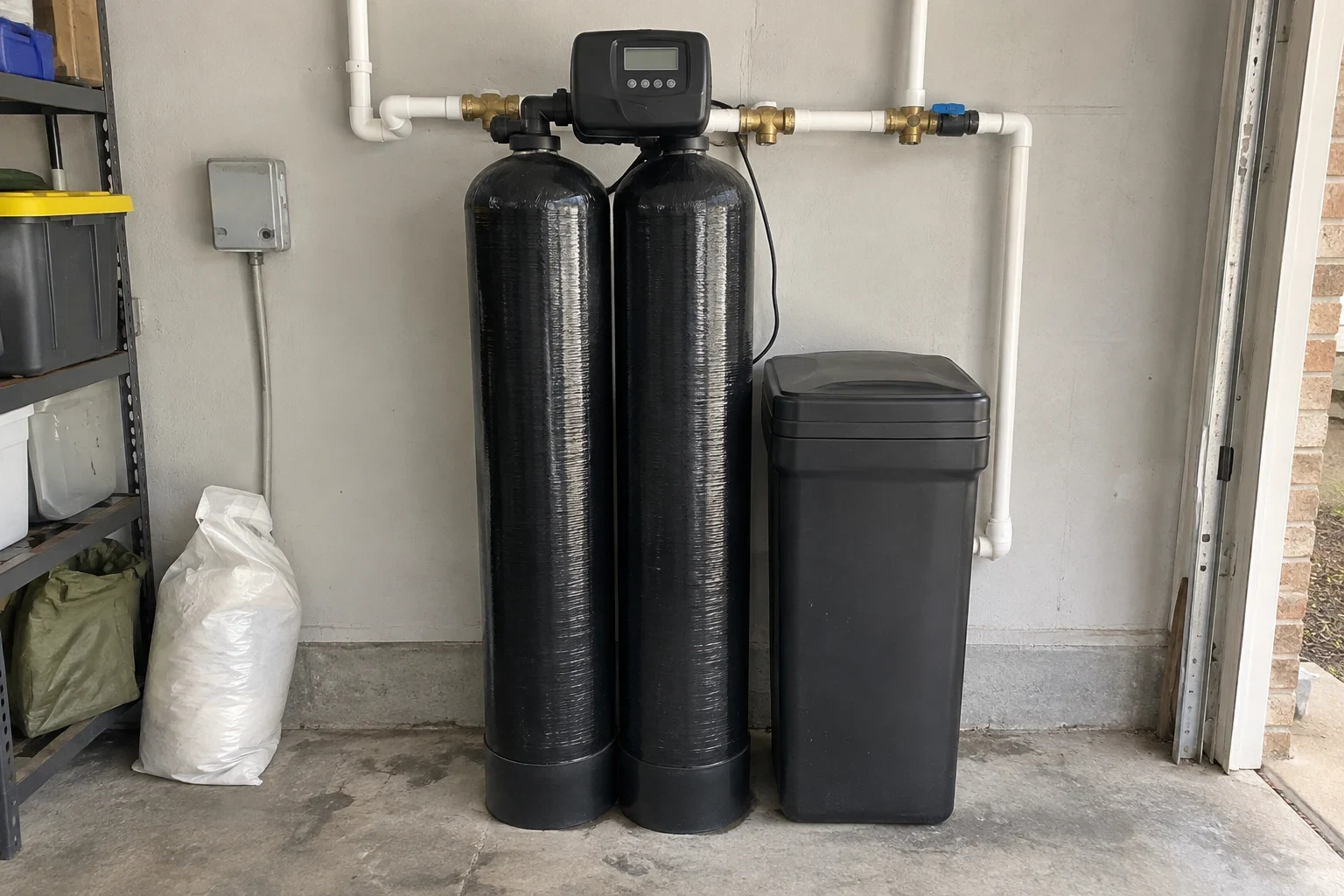
- A 1.5 cubic foot tank and a 2.5 cubic foot tank treat water at very different flow rates. Larger homes with three or more bathrooms usually need the bigger tank to keep contact time up.
- Where the system goes
- A garage with an existing loop is the simplest setup. A slab home with the main line outside may need new piping, and an outdoor install along the coast calls for brass or stainless fittings and a cover to hold up to salt air and sun.
- Pre-filtration and staging
- Well water with sediment or iron often needs a sediment filter or an iron stage ahead of the main system. Each added stage adds parts and a housing.
- Ongoing media and cartridges
- Carbon tanks get rebedded every several years, while reverse osmosis sediment and carbon prefilters are changed more often. We go over the replacement schedule so the long-term cost is clear before you commit.
How an Install Runs
Most homes go from first call to treated water in a few short steps. Here is what happens at each one.
- 1
First phone call
Start by describing the problem: a chlorine smell, spots on glassware, a sulfur odor from a well or simple curiosity about what is in the water. We ask how big your home is, how it is plumbed and where its water comes from.
- 2
Testing the water
We check hardness, chlorine, iron, pH and total dissolved solids, depending on your concern. For wells we look at more, since private wells are not treated by a utility. The readings decide the media, not the other way around.
- 3
A recommendation, part by part
We walk you through the system we suggest, what is inside it and what it will and will not remove. If two options would work, we lay out the trade-off in cost and upkeep.
- 4
Installation day
We shut off the water, cut in a bypass valve, mount the tank or housing and run the drain line where one is needed. We flush the new media, check every joint for leaks and clean up before we leave.
- 5
Service after the sale
We set your cartridge and media schedule and stay available for questions, adjustments and replacements for as long as you own the system.
Questions We Hear Most
My tap water smells like chlorine. What fixes that?
A whole-home carbon filter is the usual answer. If your utility uses free chlorine, standard granular carbon handles it well. Many Texas utilities use chloramine instead, which needs catalytic carbon and a larger tank for enough contact time. Your utility's annual water quality report names the disinfectant, and we can confirm it with a test.
Do I actually need a water softener?
Only if a hardness test supports it. A softener swaps calcium and magnesium for sodium or potassium using ion exchange resin. If your hardness is low, a softener adds salt costs and upkeep without much benefit. We test first and tell you plainly whether one makes sense.
How much water does reverse osmosis send down the drain?
Some always goes to the drain, because the membrane needs a steady rinse to keep minerals from building up on its surface. How much depends on the membrane design and the pressure in your line. Newer units, especially with an add-on permeate pump, use noticeably less rinse water. Before you buy, we give you the drain ratio for the exact unit we quote.
What do I get with a well water system?
It depends on what the well produces. Common setups pair a sediment filter with an iron or sulfur stage, then carbon, and sometimes a softener. A test of your well tells us which stages you need, so you do not pay for ones you don't.
Is installation really free?
Yes. We do not charge for installing the systems we sell. Your quote covers the equipment, and we handle plumbing it in, setting the bypass and connecting any drain lines.
What kind of warranty comes with your systems?
Every system we install is backed by a lifetime warranty. Ask about the details on your call, and we will cover the terms alongside your quote.
What happens after the system is installed?
We offer full service after the sale. That covers cartridge and filter changes, media questions, softener settings and adjustments if your household grows or your water changes. You keep one company to call for the life of the system.
Why Kemah Homeowners Call Us
Most filter sales pitches stop at the brand name. We go one level deeper, to the media, the tank and the fittings, because that is what decides how a system performs in year five.
We name the media, not just the model
Standard coconut-shell carbon handles free chlorine well. Chloramine needs catalytic carbon and more contact time. We tell you which one is in the tank we quote and why it matches your water.
Sized by flow, not by guesswork
An undersized carbon tank lets water rush past the media before it is treated. An oversized one adds cost with no gain in water quality. We match tank volume to your bathroom count and peak demand in gallons per minute.
Honest about what you don't need
Not every home needs a softener, and not every kitchen needs reverse osmosis. If a test shows a simpler setup will do the job, that is what we recommend.
Installation is free
We do not charge for installation. Your quote covers the equipment, and we plumb it in at no added labor cost, including bypass valves and drain connections.
We stay with the system
Full service after the sale means we handle cartridge changes, resin and media questions, and adjustments as your household or water changes.
Find Out Which Media Fits Your Water
Describe what you see, smell or taste in your water and where your main line comes in. You will hear which system we would install and which media sits inside it.