ServicesReverse Osmosis
Reverse Osmosis Drinking Water in Kemah
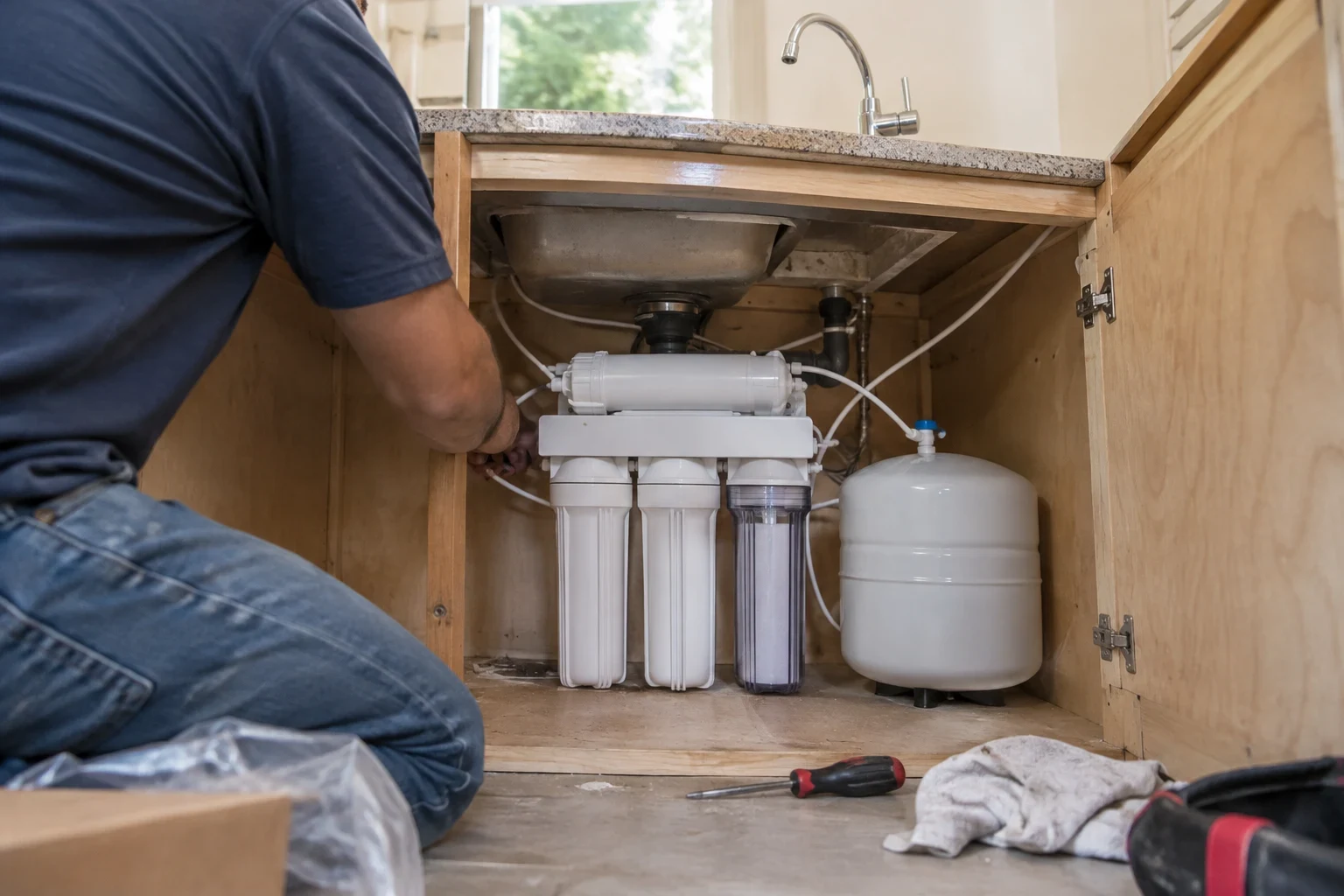
Our under-sink reverse osmosis units force tap water across a thin-film membrane that holds back dissolved salts, lead and most trace contaminants. Before you pick one, we explain each cartridge, membrane and tank option. Then we handle the install and the upkeep that follows.
How reverse osmosis works and who it suits
An RO unit treats water at a single point, not the whole house. In most kitchens that point is a dedicated drinking faucet, sometimes with a branch to the refrigerator, since that water is what ends up in glasses and cooking pots. Line pressure pushes water against a semi-permeable membrane. Clean water collects in a tank or flows directly to the faucet, and the minerals and contaminants that were held back rinse away to the drain.
RO makes sense if you want lower dissolved solids, if you are concerned about lead leaching from older pipes and fixtures, or if you just want clearer ice and better coffee. It is not designed to treat shower or laundry water. When a chlorine odor shows up at every tap in the house, our whole-home filtration page covers that problem, and many households run both systems together.
Each stage we install, and the job it does
- 01
Sediment prefilter
This first cartridge is made of spun polypropylene. It traps grit, rust particles and loose scale before they can plug the finer stages behind it.
- 02
Carbon block prefilter
Chlorine breaks down a thin-film composite membrane, so a carbon block strips it out first. If your utility treats with chloramine, we use catalytic carbon instead, because ordinary carbon removes chloramine far more slowly.
- 03
The membrane
We use thin-film composite polyamide membranes. They reject more dissolved solids than the older cellulose triacetate type and hold up better against bacteria. Their one weakness is chlorine, and the carbon stage ahead of them takes care of that.
- 04
Tank or tankless
A tank system holds a few gallons in a steel shell lined with a butyl bladder. That gives you a full-flow pour even though the membrane produces water slowly. A tankless unit saves cabinet room and holds no standing water, but its pump needs an outlet under the sink.
- 05
Polishing filter and optional calcite
A final coconut-shell carbon cartridge removes any flavor the water picks up while it sits in the tank. If you like a rounder taste, a calcite cartridge can put a small amount of calcium and magnesium back.
- 06
RO faucet and air gap
A separate faucet sits next to your kitchen faucet. The drain connection runs through an air gap, which keeps wastewater from ever siphoning back toward the clean side.
Questions about Reverse Osmosis?
Call(281) 688-9298When an RO system is worth it for your home
Older brass fixtures or soldered copper
Most lead in drinking water comes from solder and fixtures inside the house rather than the street main. An RO membrane is among the most effective ways to cut it at the faucet you drink from.
Your pantry is stacked with bottled water
When everyone skips the tap, a dedicated RO faucet generally takes the place of those cases and the store runs to restock them.
Cloudy ice or a film in the kettle
White specks in ice and a crust inside a kettle are signs of dissolved minerals. The membrane holds back most of them.
Lab results flagged a number
High readings for nitrates, fluoride, arsenic or total dissolved solids are all things RO handles well. Our water testing page explains how we interpret a report like that.
What happens from first call to first glass
- 1
We talk it through by phone
You tell us where your water comes from, what you notice or worry about, and how much room is under the sink. From that we can tell whether a tank or tankless unit will fit.
- 2
We check pressure and water
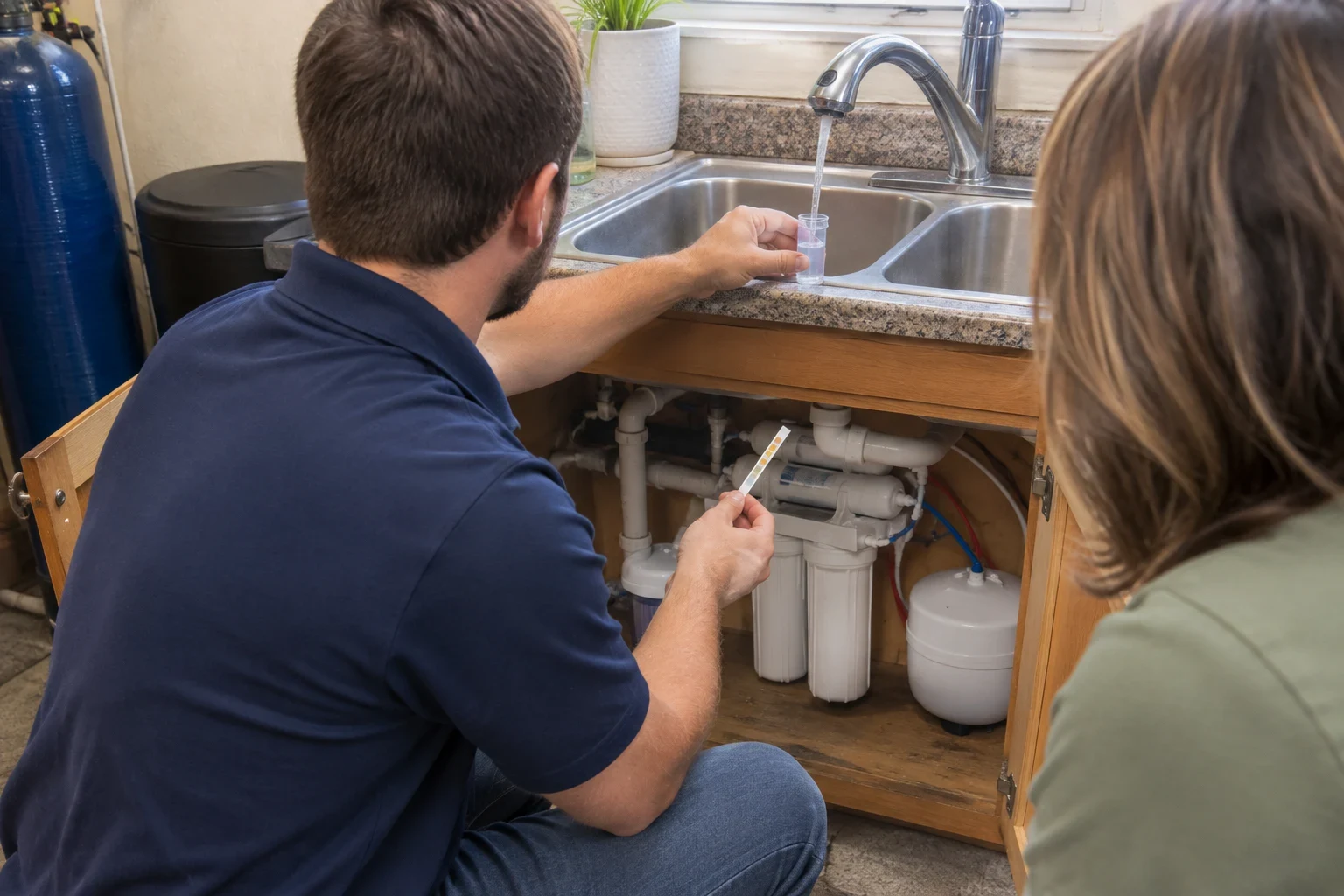
A membrane runs efficiently at roughly 40 psi or higher. When a home falls short of that, we go over permeate pump and booster pump options before installing.
- 3
Installation
First we close the cold supply and fit a feed valve on it. Next we mount the filter bracket inside the cabinet and clamp a drain saddle onto the sink tailpiece. The faucet uses an open sprayer hole when one exists, and for granite or quartz we cut a new hole with a diamond bit.
- 4
Flushing and a walkthrough
Fresh carbon and a new membrane both need flushing, so the first full tank goes down the drain. We check each fitting for drips, then show you how the cartridges twist out and in.
What sets the price of a reverse osmosis system
Most of your total comes from the hardware you choose, not the labor. When you call, we break the system into its parts and price each one, so you can see what every upgrade adds before you decide.
- Tank or tankless
- A tankless unit with a built-in pump costs more up front. You get back cabinet space, and these units usually send less water to the drain.
- Number of stages
- Most homes are well served by four stages: sediment, carbon, membrane and a polishing filter. Adding catalytic carbon, a calcite remineralizer or a UV lamp raises the price with each one.
- Extra water lines
- Running a line to a refrigerator or ice maker takes more tubing and fittings, plus the time to make the connection behind the appliance.
- Correcting low pressure
- Weak line pressure means adding a pump. Some pump styles also need an electrical outlet put in under the sink.
- Faucet finish and countertop
- Chrome, brushed nickel and matte black faucets carry different prices. Drilling a new hole through granite or quartz takes more time than using an open sprayer hole.
Common questions about reverse osmosis
How much water does an RO system send to the drain?
A membrane always needs a reject stream to flush away what it blocks. Older tank systems can drain three or four gallons for every gallon of clean water. Tankless and permeate-pump designs get much closer to one to one. Higher pressure improves the ratio, which is why we check your pressure first.
How often do the filters and membrane need changing?
Expect to replace the sediment and carbon prefilters once or twice a year, depending on how much water your household uses and what it carries. If those prefilters stay fresh, the membrane typically lasts two to four years. We handle those changes as part of our full service after the sale.
Does RO remove the minerals I actually want?
Yes. The membrane rejects most calcium and magnesium along with the contaminants. For most people, food supplies far more of those minerals than water does. If you miss the taste, a calcite cartridge adds some back, and our alkaline water systems page describes a stronger option.
Is there a warranty on the RO unit?
Yes, a lifetime warranty covers every reverse osmosis system we put in. Our company is in business 13 years now, so when you need that warranty, you are dealing with the same people who did the installation.
Do I need a softener in front of the RO system?
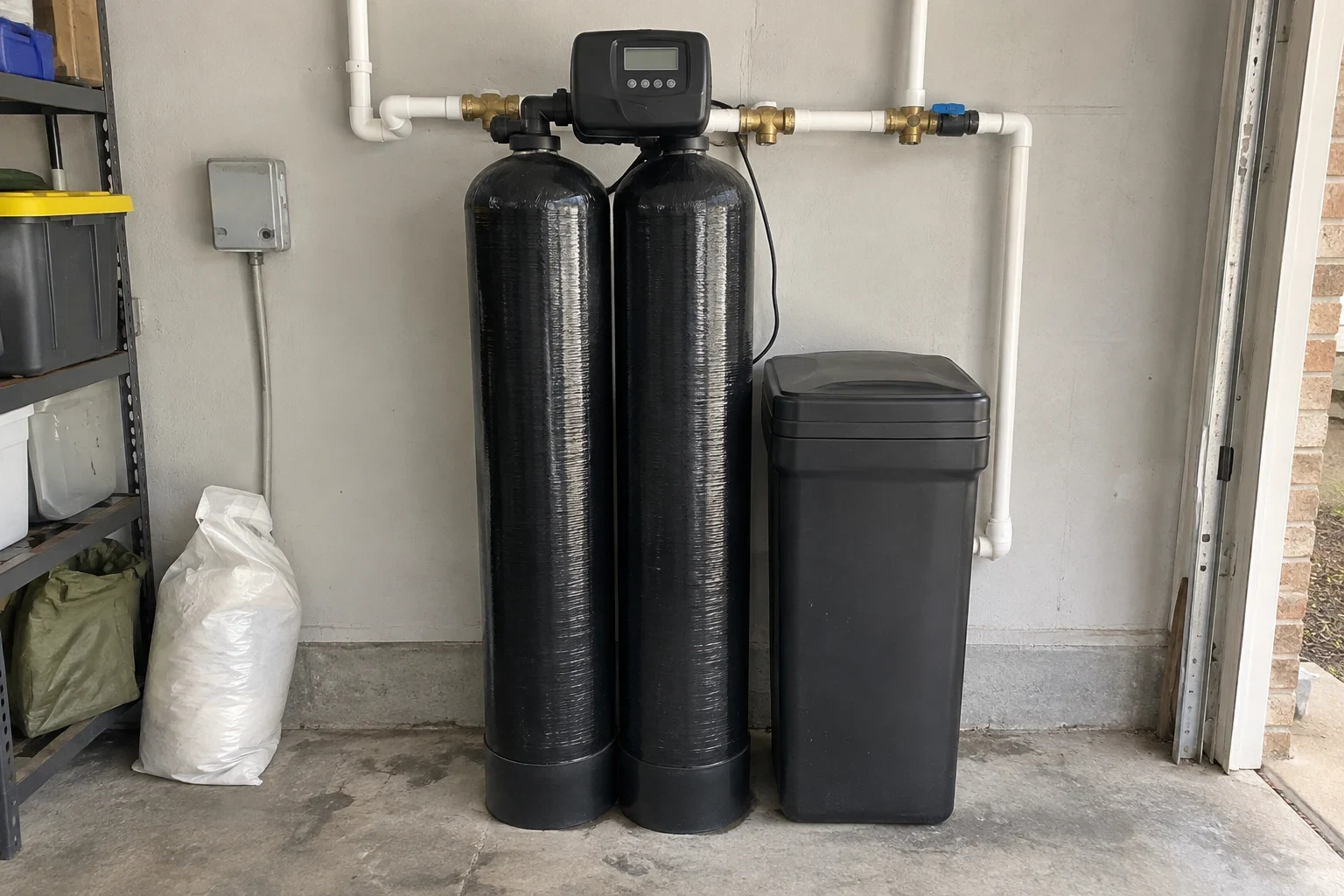
In most cases, no. Very hard water can scale a membrane sooner than normal, but many homes run RO just fine without softening. We would rather see your hardness reading before recommending one, and our water softeners page explains when it is worth the cost.
Pick the membrane and tank that fit your kitchen
Tell us about your water and the space under your sink, and we will point out which parts earn their place and which you can leave out. After the install, we stay with you for filter changes and repairs as part of our full service after the sale.